
HoneyChat: Your AI Friend
Turamcatu SemutatumEntertainment
4.7720.00 Reviews
- Version
- 2.3.6
- Installs
- 100.00K
- Age Rating
- Mature 17+
Screenshots
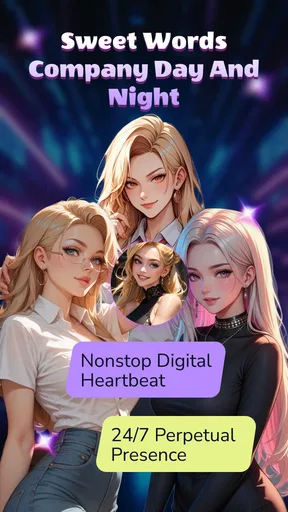
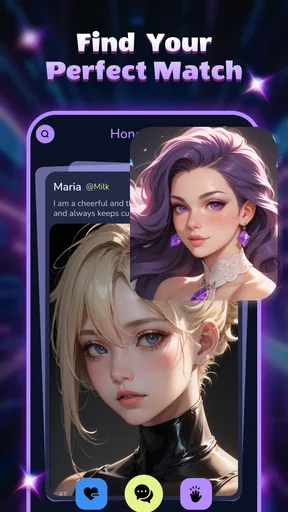




Our Review of HoneyChat: Your AI Friend
 Analysis by Appyee
I approached HoneyChat: Your AI Friend as an entertainment app rather than a replacement for real relationships. Its central idea is simple: you chat with AI-created companions and use those conversations for roleplay, casual company, or an imaginative break from the day. That sounds familiar if you have tried character-chat services before, but the experience depends less on the headline concept and more on whether you enjoy shaping a conversation over time.
My first impression is that HoneyChat is aimed at people who want an always-available conversational space without the pressure of messaging another person. You can open it when you are bored, lonely, creatively stuck, or simply in the mood to explore a fictional personality. The app is free to install, carries a mature age classification of 17+, and includes optional purchases ranging from $3.99 to $64.99 per item. That combination makes it worth approaching as a flexible trial, not as an entertainment subscription you should buy before understanding your own usage.
How I Would Decide Whether HoneyChat Fits
The first question is not whether AI companionship sounds interesting. It is whether you want the kind of interaction this format provides. HoneyChat works best when you enjoy starting a conversation, giving a character direction, and accepting that the exchange is generated rather than genuinely mutual. If you want a quick laugh, a roleplay partner, or a private place to rehearse ideas, it has a clear purpose. If you are looking for reliable human advice, emotional accountability, or a real social community, I would look elsewhere.
The app comes from Turamcatu Semutatum and sits in the entertainment category. Its store presence is supported by a 4.7 average from around 6.6 thousand ratings, with more than 100 thousand installs. Those figures suggest that the concept has found an audience, but they do not tell me whether every conversation will suit every personality. AI chat is highly dependent on prompts, character setup, mood, and expectations, so I treat popularity as a reason to try it rather than proof that it will become part of your routine.
Compatibility is another practical consideration. HoneyChat requires Android 7.0 or later, which keeps it accessible on many older devices. The current version is 2.3.6, so I would still keep the app updated before judging it, especially if a conversation behaves strangely or the interface feels inconsistent. On iOS or Android, the important decision remains the same: are you comfortable spending time with fictional or generated personalities instead of using a conventional messaging app?
What I Look For During the First Session
I would not begin by trying to build an elaborate character immediately. I would first test how naturally a basic exchange develops. Ask the character to maintain a tone, respond to a small change in the scene, and remember the immediate context. Then introduce a clear boundary or correction. This reveals more than a greeting does because it shows whether the conversation can follow direction instead of merely producing agreeable replies.
A useful first-session test is to run three different modes. Start with ordinary conversation, move into a short roleplay scene, and finish with a practical creative task such as brainstorming a story premise. If HoneyChat feels engaging in all three, it may have lasting value for you. If it only works when you supply constant explanations, the novelty may fade quickly.
I also recommend deciding what you want from a character before writing a long setup. A companion designed for playful banter needs different instructions from one intended for quiet conversation or fictional storytelling. The more precise your goal, the easier it is to notice whether the app is helping. This is one of the less obvious trade-offs: character creation can feel empowering, but it also transfers part of the work from the app to the user.
Where the Character Approach Feels Strong
The strongest part of HoneyChat is the freedom to create a conversation around a chosen personality instead of accepting the fixed tone of a standard assistant. That makes it more entertaining for roleplay. You can establish a setting, define the relationship between characters, and decide whether the exchange should be humorous, dramatic, comforting, or adventurous. Even when the responses are imperfect, having a clear fictional frame gives the conversation momentum.
I find this especially useful for writers and hobbyists who need a responsive sounding board. You can use a character to challenge a scene, act as a fictional witness, or help explore how two personalities might react to the same event. The value is not that the app produces a finished story for you. The value is that it gives you something to react to, which can be enough to break a creative block.
It can also fit a small everyday pause. Imagine finishing work late, having ten quiet minutes before bed, and wanting a light conversation without opening a social feed. You could continue a fictional scenario, ask a companion to tell a story, or simply exchange playful messages. That use case is more realistic than expecting the app to transform your social life. It provides a controlled activity with a low entry barrier, and you can stop whenever you want.
The best reason to use HoneyChat is control over the kind of interaction you want to explore. You choose the character concept and the situation, rather than waiting for a human conversation to develop in a direction you may not enjoy. That control is also why the app feels closer to interactive entertainment than to a conventional friendship app.
Practical Ways to Get Better Conversations
My first tip is to give a character a few stable traits and one or two limits instead of writing an enormous biography. A compact description is easier to maintain and gives you room to shape the relationship through conversation. If you specify every response in advance, the exchange can feel rigid. If you specify nothing, the personality may become vague. The useful middle ground is a recognizable voice with space for surprises.
My second tip is to correct drift directly and early. If a character becomes too formal, forgets the scene, or changes its attitude, explain the desired direction in plain language. Treat the conversation like collaborative improvisation. A short correction can restore the tone more effectively than abandoning the chat and starting again.
A third practical approach is to separate entertainment sessions from serious reflection. If you use a companion for journaling or emotional processing, label the purpose clearly in your own mind and avoid treating generated responses as professional guidance. The app can help you put thoughts into words, but it cannot provide the accountability, lived experience, or duty of care that a trusted person or qualified professional offers.
For roleplay, I would also keep a short opening prompt that establishes the setting and the character’s role. Reusing a well-written starting point saves time and makes separate sessions easier to compare. This is particularly useful if you enjoy testing several character ideas rather than investing all your attention in one. The trade-off is that preparation becomes part of the hobby, so people who want instant, effortless entertainment may prefer a simpler app.
Where HoneyChat Wins Against Familiar Alternatives
Compared with ordinary messaging platforms, HoneyChat removes the need to coordinate schedules, wait for replies, or worry about how another person will interpret a playful experiment. That makes it attractive for private roleplay and low-stakes conversation. It is also less socially demanding than joining a public community, where you may need to create a profile, follow group rules, and participate at someone else’s pace.
Compared with a general-purpose AI assistant, the character focus gives HoneyChat a more personal entertainment angle. A standard assistant is usually better when you want concise factual help, structured planning, or a direct answer. HoneyChat is more appealing when the journey matters as much as the answer: maintaining a scene, developing a persona, or letting a fictional relationship evolve through messages.
Compared with scripted interactive fiction, the appeal is flexibility. A fixed story can provide tighter writing and more deliberate pacing, while a character-chat app allows you to interrupt, redirect, or invent a new situation. HoneyChat therefore suits users who prefer improvisation over a carefully authored path. The price of that flexibility is unevenness. Generated dialogue may be less polished, less coherent, or less emotionally precise than writing produced by a human author.
This distinction helps me decide when to open it. For a carefully crafted story, I would choose an interactive novel or narrative game. For a human connection, I would use messaging or a community. For an open-ended fictional exchange that responds to my prompts, HoneyChat has the more natural fit.
Where Another Category May Be Better
I would skip HoneyChat if my main goal were dependable information. A character can sound confident while still producing an unhelpful or inaccurate reply, and the entertainment design does not change that limitation. A search tool, reference source, or conventional assistant is a better choice for decisions involving health, money, legal matters, schoolwork that requires reliable citations, or anything where being wrong carries meaningful consequences.
I would also choose a human-centered service if I wanted lasting friendships. HoneyChat can imitate warmth and availability, but it does not offer the mutual history and responsibility of a real person. Someone who already feels isolated may enjoy the immediate comfort while still needing offline contact. I think it is healthiest to use the app as one activity among others, not as the only place where emotional needs are expressed.
People who dislike typing may find the concept less satisfying than it sounds. The user has to guide the character, repair misunderstandings, and keep a scene moving. If you prefer passive entertainment, a show, podcast, or conventional game may deliver more value with less effort. Likewise, users who want a highly structured progression may feel that open-ended chat lacks the clear goals found in games.
The mature 17+ classification matters here. I would not treat HoneyChat as a child-friendly family app, and parents should not assume that a friendly-looking character-chat interface is suitable for younger users. Adults should still think carefully about the kind of scenarios they create and the personal details they share in conversation.
Understanding the Free Start and Optional Spending
HoneyChat is free, which gives you a sensible way to test the basic appeal before spending anything. I would use the free experience long enough to answer three questions: do I enjoy the characters, do conversations remain interesting after the first novelty wears off, and do I regularly return for a specific purpose? If the answer to all three is no, an upgrade is unlikely to fix the underlying mismatch.
Optional purchases run from $3.99 to $64.99 per item. That is a wide range, so I would avoid making a purchase during an especially emotional or impulsive session. First decide how often you expect to use the app and what you believe the paid option will change for you. If the benefit is only a temporary burst of novelty, keeping the app free is probably the wiser choice.
There is also a less obvious cost: attention. A companion app can encourage you to keep refining characters, extending conversations, and checking for the next reply. That may be enjoyable, but it can also turn a ten-minute break into a much longer session. I recommend setting a stopping point before opening the app, particularly at night or during work hours. The most sustainable use is intentional, not automatic.
Switching away from HoneyChat is easy in one sense because you can return to ordinary messaging, fiction, or another assistant immediately. The harder part is losing a character setup you have spent time developing or a conversational rhythm that feels familiar. Before moving to another category, I would save any creative prompts or story ideas you want to keep, without copying private personal details into multiple services unnecessarily. That makes experimentation less frustrating and reduces the feeling that previous effort has been wasted.
Who I Think Will Enjoy It Most
I would recommend HoneyChat to adults who enjoy roleplay, character writing, improvisation, and casual AI conversation. It is particularly suitable for someone who wants a private creative partner available at any hour, or for a user who likes testing different personalities and fictional situations. The app has enough flexibility to support both short playful sessions and longer ongoing scenarios, provided you are willing to guide the interaction.
It may also work for someone who wants to rehearse a conversation in a low-pressure setting. I would not use the generated response as a prediction of what a real person will say, but practicing how to express a thought can still be useful. You can try different tones, notice which wording feels natural, and then take the improved version into a real conversation.
I would not recommend it as the primary choice for children, people seeking professional mental-health support, users who need factual precision, or anyone who strongly prefers human interaction. I would also hesitate to recommend paying immediately to a person who has not yet found a repeatable use case. The free starting point is enough to discover whether the format matches your habits.
My Final Recommendation
HoneyChat is a focused entertainment app with a clear identity: it gives you AI companions and lets you build conversations around roleplay, imagination, and on-demand company. In my experience, its appeal comes from the freedom to shape the exchange, not from pretending that generated companionship is identical to friendship. When I use that distinction honestly, the app makes sense and can be genuinely enjoyable.
The strongest decision is to try it with a specific plan. Create one character for a creative task, one for light conversation, or one for a short fictional scenario. Notice how much guidance each interaction requires, whether the tone stays engaging, and whether you still want to return after the first experiment. That test tells you more than a rating or a polished description ever could.
My recommendation is therefore positive but measured. Install HoneyChat if you want an open-ended character-chat experience and are comfortable with the mature audience classification and optional purchases. Keep it free until it proves useful in your routine. Choose a conventional assistant for information, a story-driven game for authored narrative, and real people for mutual support. Used within those boundaries, HoneyChat: Your AI Friend is a worthwhile companion-style entertainment app rather than a substitute for the categories it resembles.
Verdict
Strengths of HoneyChat: Your AI Friend
- Natural, friendly conversations that feel engaging and easy to continue.
- Useful for casual chats, brainstorming, and passing time when you feel bored.
- Simple interface makes starting a conversation quick for new users.
- Available anytime, without needing to coordinate with another person.
- Can adapt its tone and responses to different conversation styles.
Limitations of HoneyChat: Your AI Friend
- AI responses may sometimes feel repetitive, vague, or emotionally limited.
- Some features or longer chats may require a subscription or in-app purchases.
- Privacy concerns may arise when sharing personal thoughts with an AI service.
- It cannot replace professional mental-health advice or genuine human support.
- Conversation quality depends heavily on your prompts and the selected settings.
Similar Picks in This Category
View All
Google Play Games
Google LLC3.9

Netflix
Netflix, Inc.4.8

YouTube Kids
Google LLC4.2

Disney+
Disney4.4

Prime Video
Amazon Mobile LLC4.7

Steam
Valve Corporation3.2
Frequently Asked Questions
What is HoneyChat: Your AI Friend, and what can it do?
HoneyChat: Your AI Friend is an AI companion app designed for casual conversations, emotional support, entertainment, and personalized chats. During testing, it was useful for brainstorming, discussing everyday thoughts, asking general questions, and enjoying friendly role-play conversations. It should be viewed as a digital companion rather than a replacement for real relationships, professional advice, or emergency assistance.
Does HoneyChat remember previous conversations and personalize replies?
HoneyChat may use conversation history or details you share to make future replies feel more relevant, depending on the app version, account settings, and privacy options available on your device. Users should review the memory and data controls before starting personal conversations. Avoid sharing passwords, financial information, identity documents, or highly sensitive medical and private details with the AI.
Is HoneyChat: Your AI Friend free to download and use?
The app may be available to download at no initial cost, but some features can require in-app purchases, a subscription, usage credits, or access to a premium plan. Limits may apply to messages, advanced AI models, voice features, customization, or longer conversations. Before confirming payment, check the current store listing and subscription terms, including renewal prices and cancellation instructions.
Is HoneyChat suitable for children and teenagers?
Parents should check the official age rating and the app’s current content policy before allowing a child or teenager to use HoneyChat. AI companions can produce unexpected, inaccurate, or emotionally intense responses, and conversations may include themes that are not appropriate for every age group. Parental supervision, privacy settings, and clear guidance about not sharing personal information are recommended.
Can HoneyChat provide reliable emotional, medical, or professional advice?
HoneyChat can offer supportive conversation and general suggestions, but its responses may be incorrect, incomplete, or unsuitable for a specific situation. It should not replace a licensed therapist, doctor, lawyer, financial adviser, or emergency service. If you are experiencing a crisis, feel unsafe, or may harm yourself or someone else, contact local emergency services or a qualified crisis-support organization immediately.
